

You Do Not Wake Up Diabetic. You Become It Slowly.
Blood sugar instability is shaping your energy, your weight, and your long-term health right now. It started long before any diagnosis. Matthew Levy’s The Glucose Reset explains how, and what to do about it.
Meet Matthew Levy
Matthew Levy is a UK-based author and independent researcher focused on one question: why so many people feel unwell long before they’re ever diagnosed. His work explores the connection between blood sugar, energy, inflammation, weight gain, and long-term health.
He’s known for turning complex health science into clear, practical guidance people can actually use. No confusing terminology. No gimmicks. Just straightforward insight that helps readers understand what’s happening in their bodies and what to do next.
From The Blog
Short, focused reads on blood sugar, metabolic health, and the daily habits that either protect or undermine your biology.
About The Glucose
Reset, Volume 1
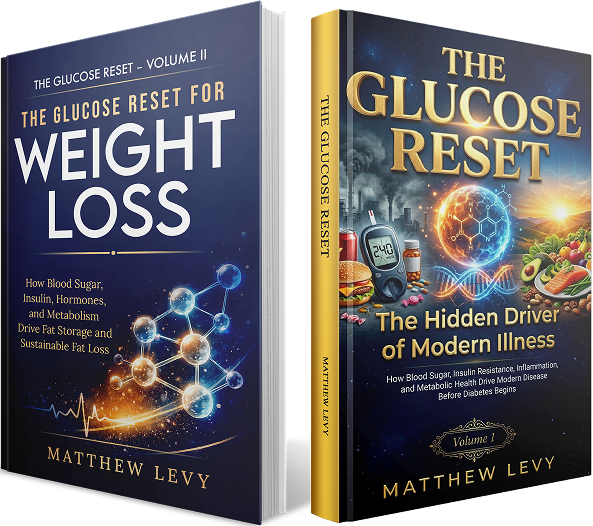
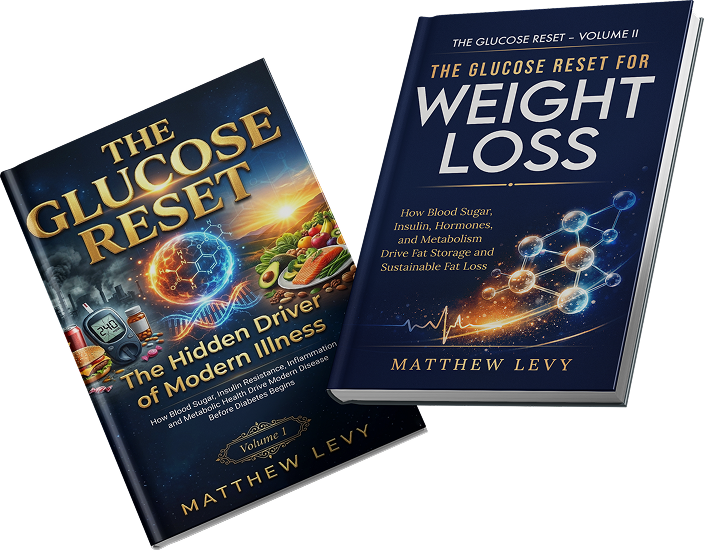
Many people live with the signs of blood sugar imbalance for years before it ever shows up in a diagnosis. The afternoon crashes. Constant cravings. Stubborn weight gain. Brain fog. Feeling drained after meals. The Glucose Reset, Volume 1 connects those everyday struggles to what may be happening beneath the surface. It explains the role of glucose, insulin, and modern habits in metabolic health, then gives you practical steps to create steadier energy, better balance, and lasting change.
The Wisdom Within Each
Chapter
Lorem Ipsum is simply dummy text of the printing and typesetting industry.
Chapter 1: Lorem Ipsum is simply dummy text of the printing
Chapter 2: Lorem Ipsum is simply dummy text of the printing
Chapter 3: Lorem Ipsum is simply dummy text of the printing
Chapter 2: Lorem Ipsum is simply dummy text of the printing
What Readers Are Saying
“A structured, evidence-informed approach that finally makes metabolic health understandable. The framework is realistic, and the results speak for themselves.”
I recommend this book to clients who want to understand what is happening in their body, not just follow a set of instructions. The explanation of how glucose spikes connect to inflammation is the clearest I have read in any accessible health book. The framework in the final section is practical and realistic, which is rare. Most books in this space give you a protocol that requires enormous disruption to your life. This one gives you principles you can apply at your own pace.
Sarah M.
Customer
I was skeptical of another metabolism book, but this one is different. It explains the actual biology rather than just telling you what to eat. I have experienced energy crashes after lunch for years and always assumed it was normal. Reading this book made me realise it is not normal, and more importantly, it is fixable. Three weeks after making the changes outlined in the framework, the afternoon crashes are noticeably less frequent. I did not expect results that quickly.
James R.
Customer
As a GP, I see patients regularly who are experiencing metabolic decline years before any clinical marker becomes abnormal. This book fills a gap that clinical medicine often cannot address due to time constraints. It explains the physiology accurately and accessibly, and its emphasis on early prevention aligns with where the research is pointing. I have started suggesting it to patients in the prediabetic range who want a resource they can actually read and apply.
Dr. Helena B.
Customer
I picked this up after struggling with persistent fatigue for over a year. I had blood tests done twice and was told everything was normal. This book gave me a different way of looking at the same results. The section on how symptoms appear before lab markers become abnormal was particularly useful. I made modest changes to meal timing and reduced processed carbohydrates, and my energy through the school day has improved considerably. It is not a dramatic story, but the difference in my daily function is real.
Claire T.
Customer
I am in my early sixties and have been watching my metabolic health more carefully since my brother was diagnosed with type 2 diabetes. This book is the most coherent explanation I have found of how that condition develops and, more importantly, how the process can be interrupted before diagnosis. The writing is measured and professional without being academic. Matthew Levy clearly understands his subject and writes as though he respects the reader’s intelligence.
David K.
Customer